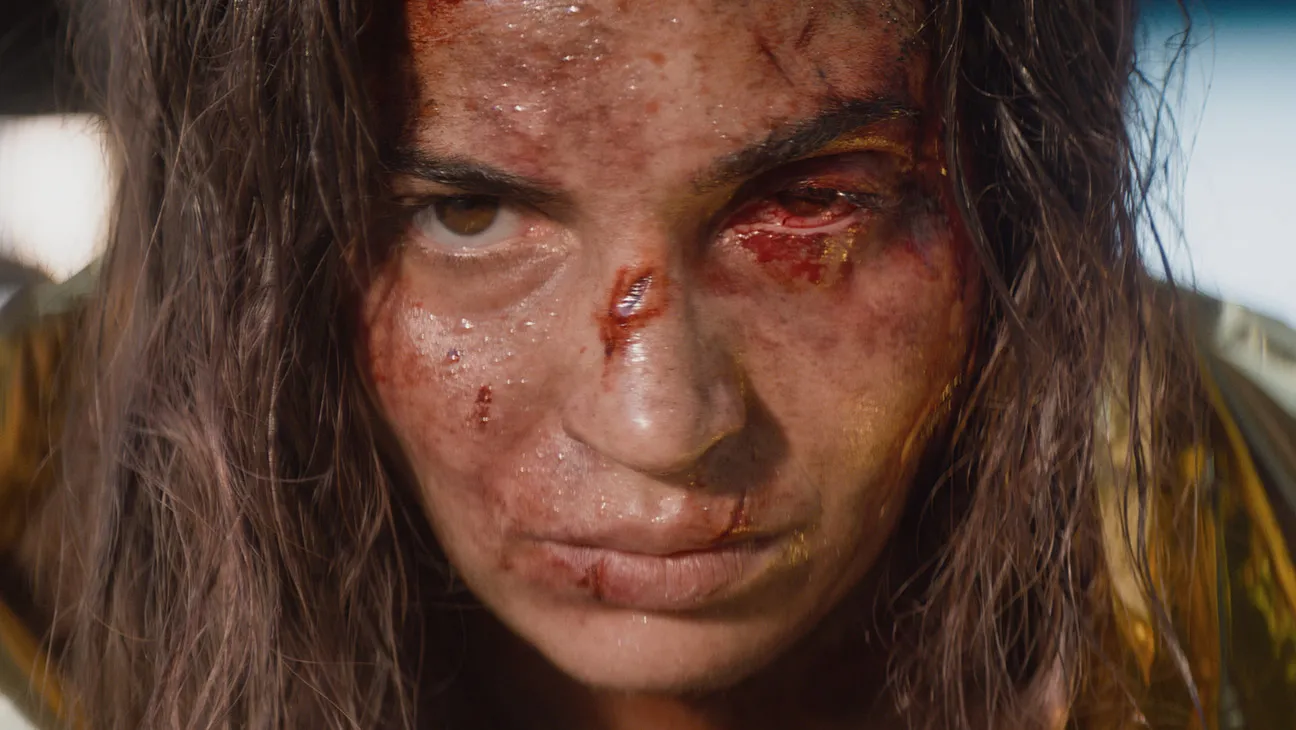

Actions Really Do Speak Louder than Words
Written by Sofia Mongillo Bermejo
Action films
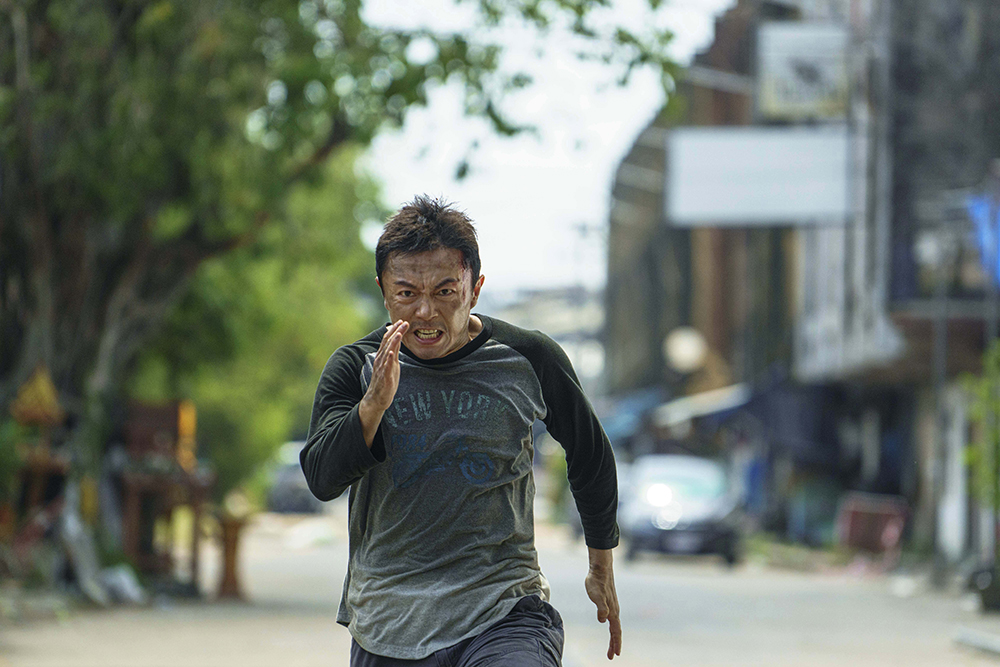
often ask audiences to marvel at what their heroes can do. Kenji Tanigaki's The Furious is more interested in why they do it. Hitting theaters June 12, the martial arts thriller follows Wang Wei (Xie Miao), a father who takes justice into his own hands after witnessing his daughter's kidnapping. Teaming up with journalist Navin (Joe Taslim), whose own life has been shaped by loss, they launch a brutal operation to take down a criminal trafficking syndicate. The movie wastes little time kicking into high gear, delivering an adrenaline-pumping opening off the bat. That relentless pace and high-stakes conflict carries throughout the entire narrative.
Despite serving as the film's central protagonist,
Wei remains an enigmatic figure. We learn little about his past, and as a non-verbal character, he relies entirely on physical expression and the occasional scribbled note to communicate. Yet, due to Miao's nuanced performance and Tanigaki's intentional choreography, Wei never feels underdeveloped. Instead, the film proves that, if done correctly, compelling characterization can emerge through movement rather than dialogue alone.
Miao isn't the only standout, however.
The supporting cast consistently rises to the occasion, with several of the film's antagonists leaving a lasting impression despite limited screen time. Their performances help elevate the stakes of each confrontation, ensuring that the film's conflicts feel personal rather than one-sided. Through stylized choreography and deeply personal stakes, The Furious transforms its action sequences into powerful storytelling tools, ensuring that every confrontation carries genuine weight.
Considering Tanigaki's background
as a choreographer and stunt performer, it's no surprise that the film's fight sequences feel so dynamic and thoughtfully constructed.
The choreography doesn’t do the heavy lifting alone, though.
Equally important is the film's sound design, playing a crucial role in selling the brutality of the combat, from the crack of breaking bones to the sound of blades slicing through the air. These details add an extra layer of realism, making every fight feel that much more impactful.
And while it contains all the hallmarks of a revenge thriller, its core feels rooted in something much softer. Both Wei and Navin are driven by personal loss, but their actions stem less from a desire for vengeance than a determination to protect and seek justice. As a result, the film's violence rarely feels gratuitous. Instead, each confrontation is grounded in the vulnerabilities and motivations of its characters. There’s an emotional weight to even the most brutal encounters.
That said, The Furious isn’t for those who feel queasy at the sight of blood. Tanigaki doesn’t shy away from gore, and several of the film’s fight sequences are graphic in their depiction of violence.
The film also deserves credit for its pacing.
Rather than spending excessive time establishing its premise, it launches into hardcore combat almost immediately, delivering an adrenaline rush within its opening minutes. Despite the sheer volume of fight sequences, the film never feels repetitive or overlong, continually finding new ways to keep its momentum engaging.
The Furious proves that action films can offer more than spectacle alone. By allowing movement and combat to serve as extensions of character. It delivers a martial arts thriller that tugs at your heartstrings as often as it leaves your palms sweating.
By ThePopulationAppeard
On the same topic

Apple Tv + Prime Target blends of high-stakes
A Thrilling, Absurd, and Addictive Ride
By ThePopulationAppeard
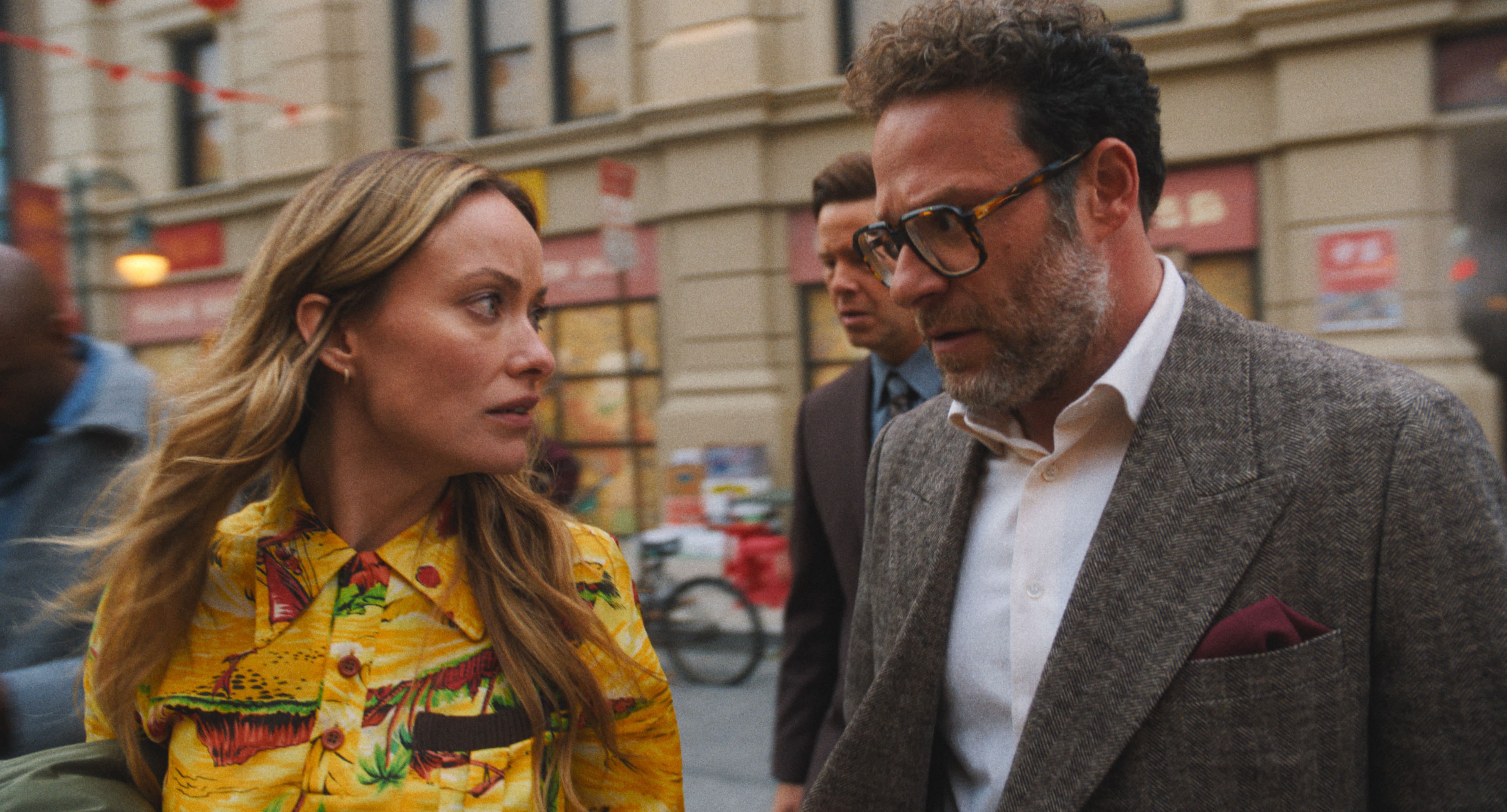
“The Studio”
Seth Rogen Leads the Charge in Apple TV+'s Hilarious New Series
By ThePopulationAppeard
Carolina, Caroline
Love, Lies, and the American South
By ThePopulationAppeard
Read our latest ones
Verity
Unsettled, Not Sold
By ThePopulationAppeard
Buddy
Huggy, and a Little Bit Nutty
By ThePopulationAppeard
Insidious
Out of the Further: It Runs in the Family
By ThePopulationAppeard
Her Private Hell
A Dream You Can't Quite Wake From
By ThePopulationAppeard
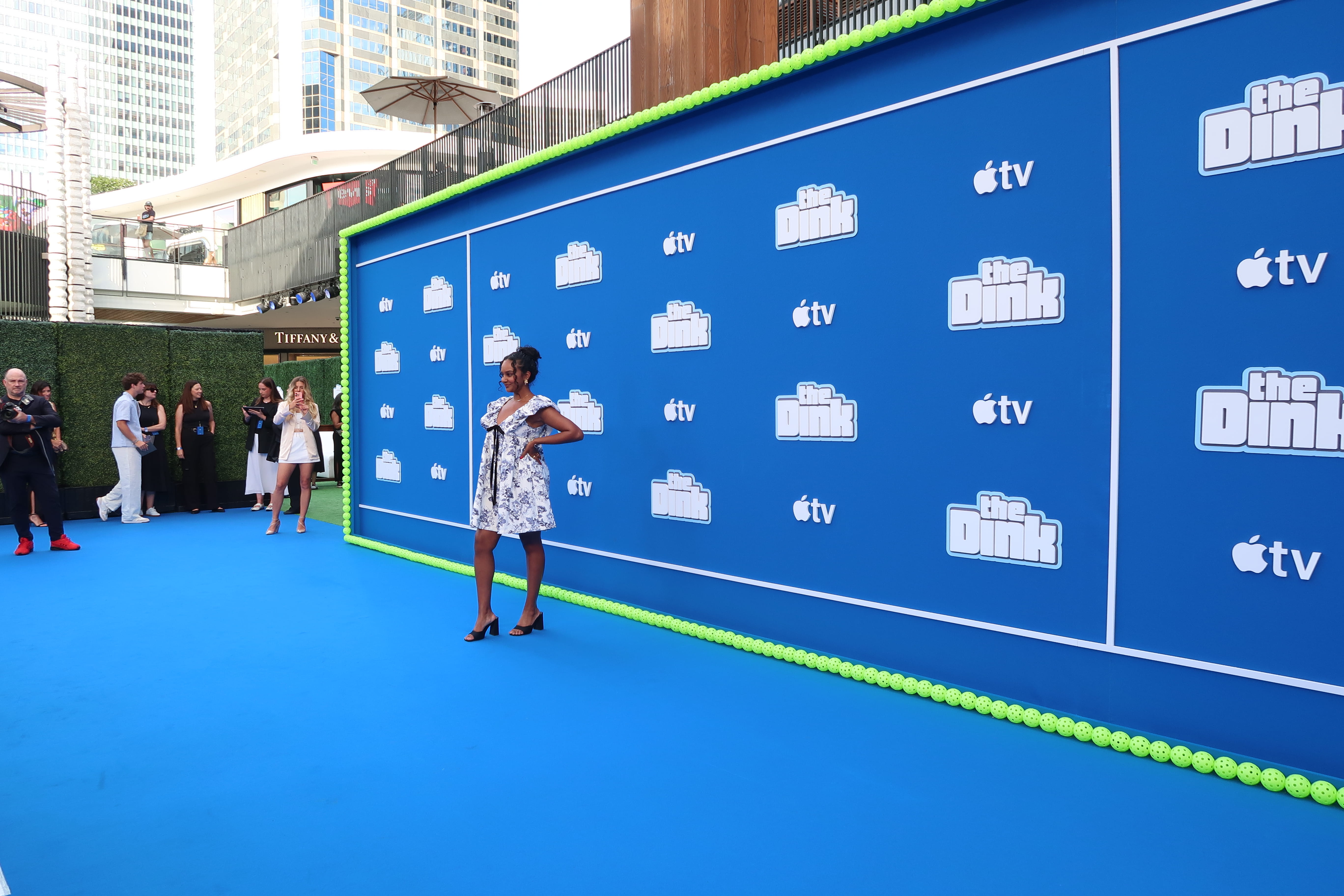
The Dink
We were at: Apple's The Dink Premiere
By ThePopulationAppeard