
Huggy, and a Little Bit Nutty
Written by Sofia Mongillo Bermejo
At an early screening of Buddy at the Aero Theatre in Santa Monica, I felt a soft tap on my shoulder, only to turn around and find a fuzzy orange unicorn embracing me for a hug.
A few minutes into the film, I wondered how the cute and cheerful creature was supposed to become the villain of anything. That confusion is an engine of the movie, but it doesn’t let you hold on to it for long.
It's Buddy!
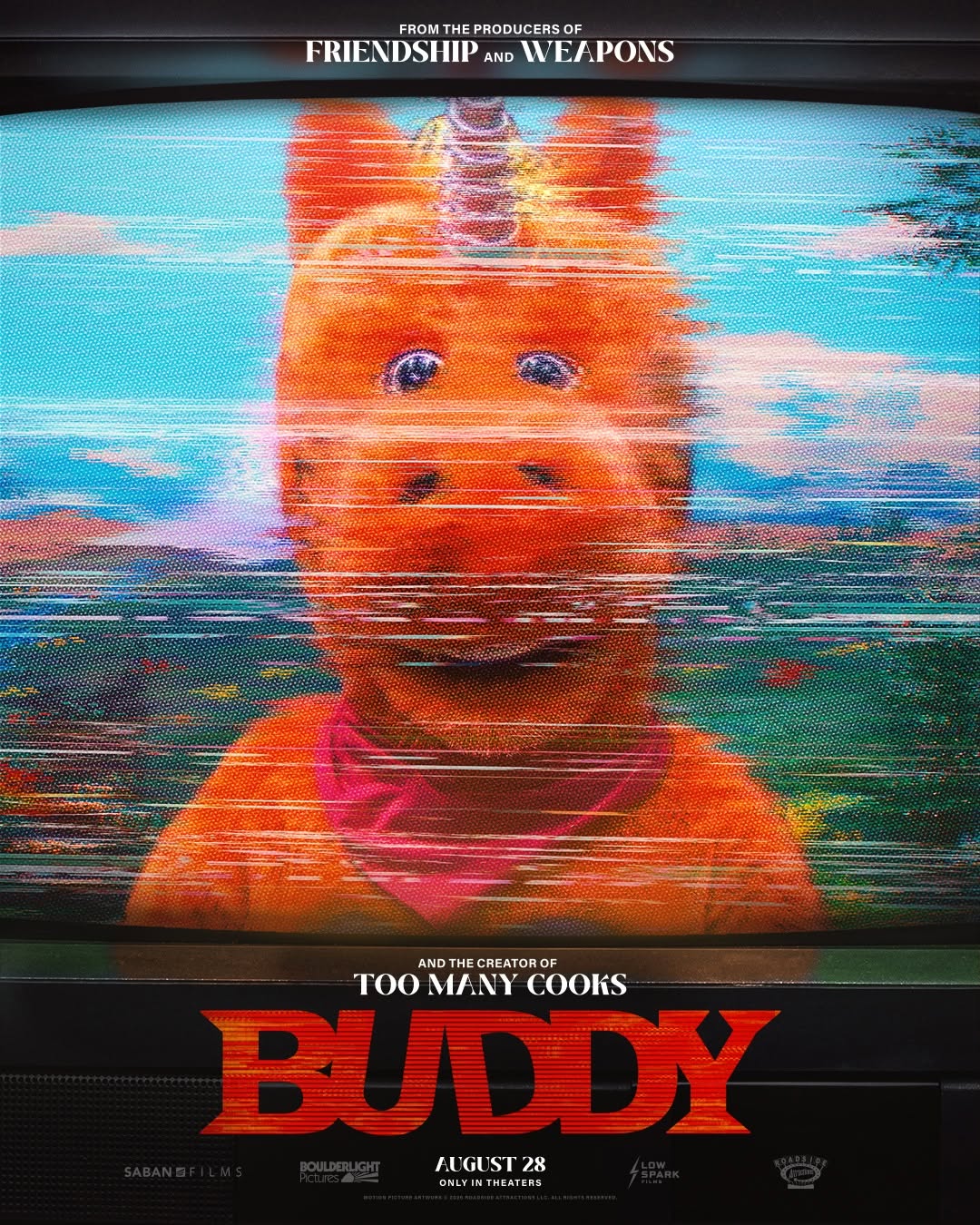
is a 1990s children's television series hosted by an anthropomorphic talking unicorn, Buddy. He’s surrounded by the friendly ensemble the format demands: Mr. Mailbox, Strappy the Backpack, Charlie the Train, and more. The premise is simple. Kids learn a lesson alongside Buddy and friends, then put it to music. Break one of Buddy's rules, though, and bad things start to happen.
The film is analog horror in the truest sense. Built around old children’s programming, it understands that the scariest thing isn’t necessarily the content; it's the texture. Director Casper Kelly builds a show designed to mimic something wholesome and nostalgic, then lets you sit in it long enough to notice everything that's wrong.
Kelly
is best known for creating Too Many Cooks, the 2014 Adult Swim short that swallowed the internet for about a month. Once you know that, Buddy makes total sense.
This is Kelly’s feature directorial debut, one of several first-time horror features this year alongside Backrooms and Obsession. It’s a good year for letting new filmmakers take a swing at something of their own, and Kelly makes a pretty convincing case for it.
What he understands particularly well is that television has its own grammar, and that horror can come from following it too faithfully. The repetition, the forced enthusiasm, the transitions, the songs, the lessons: all of it is familiar enough that you know what is supposed to happen next.
Buddy’s trick is to take something designed to make children feel safe and turn that safety into something they have to earn.
The colors are bright, the songs are sweet. Buddy is encouraging. Everything about him says you are safe here. The problem is that, eventually, he wants you to prove it.
Then he changes one thing, or lets one moment linger a little too long, and suddenly the thing you recognized as comforting becomes threatening. Buddy doesn't have to invent a new nightmare. It just has to corrupt one you already know.
Buddy’s voice
does not match his face, and that mismatch is where Keegan-Michael Key does his best work. What Buddy is saying is sweet almost all the time: children’s-show cadence, children’s-show vocabulary, encouraging and warm. He’s easing you in the way a lullaby does. But there's something in the tone, something sinister underneath it.
If you closed your eyes and only listened, you would feel something entirely different than you feel looking at a bright orange unicorn — an animal that, in every other story, is mystical, precious, beautiful, and uses its powers for good. You're seeing one thing and feeling another, and your brain refuses to reconcile them.
Buddy’s theme song works the same way. It's a perfectly constructed piece of nostalgic children's television: “huggy, a little bit nutty, teaching right from wrong, a friend until the end…” Read the lyrics cold, and they're harmless. Hear them in context and "until the end" starts to sound less like a promise and more like a sentence.
Buddy himself
is a performer in a large fuzzy costume rather than a puppet, and that choice does something specific: there's a body in there. A weight and a physical presence that reads as a person pretending to be a creature, which is exactly what a kid on a soundstage in 1994 would have been looking at. The craft around him is impressive too. You can feel how much fun the set designers must have had. The colors, the aesthetic, the attention to detail are all spot on, and the show-within-the-movie is convincing enough that you almost want to watch it.
The children are the other reason it works so well. Delaney Quinn as Freddy and Caleb Williams as Wade are talented enough to act like they're acting, performing on a fake show inside a real movie, which is a much harder assignment than it sounds.
Through every exchange with Buddy, their discomfort grows. They still sound like they’re on a children’s show, but you can hear them beginning to realize that something is wrong. The performance remains cheerful even as the people inside it stop feeling that way.
A standout moment
is a hard cut. The image quality flips from degraded '90s television to modern cinema, and instantly you feel like you're watching a different movie. The children can suddenly say and act however they want, and you can see consciousness arriving in them in real time. It's the rare formal trick that isn't just a trick. The resolution is the theme.
Underneath it all
is a question about survival: what do you do when the person you're afraid of is the one you're supposed to trust? How do you protect yourself without letting them know you're resisting?
Buddy’s a total narcissist, and the movie understands that sometimes survival means playing along, staying pleasant, and pretending everything is fine when it very much isn't.
It's the source of the film's real discomfort, more than anything violent, and the movie stays genuinely unsettling while showing very little gore.
The film keeps circling something specific about the era it's imitating: children as victims, big imaginations, nobody believing them. It's hard not to read it as a nod to what a lot of '90s child stars went through on sets exactly like this one, and how thoroughly they weren't protected. These were places designed to appear safe for children while giving the adults in charge enormous control over what happened inside. Buddy's world is presented as a utopia. It's the opposite, and everyone inside it knows.
Where it slips
is the last stretch, which lags a little and pulls slightly away from the plot it spent so long building. Given how short the film is overall, this is not a serious problem, and the slowdown never undoes the work that came before it. But you feel the tempo drop, and in a movie this tightly wound, you notice.
By the time it ended, I thought about me and Buddy’s hug a little more.
It could’ve been a bit of promotional fun. Or, was it the film's whole thesis handed to me in the lobby?
Something soft and enormous puts its arms around me, and I let it, because what else would you do? Who am I to say no to the cute mascot?
Maybe I’d already done exactly what Buddy wanted me to do: play along.
By ThePopulationAppeard
On the same topic
FX’s Alien: Earth
Disney+ Unveils Key Art and Teaser
By ThePopulationAppeard

HBO’s House of the Dragon
Secures Third Season Renewal as Anticipation Builds for Season Two Premiere
By ThePopulationAppeard
Highest 2 Lowest
Spike Lee and Denzel Washington Reunite
By ThePopulationAppeard
Read our latest ones
Crystal Lake
Drowned in Its Own Ambitions
By ThePopulationAppeard
Wildwood
A Labor of Love
By ThePopulationAppeard
Verity
Unsettled, Not Sold
By ThePopulationAppeard
Insidious
Out of the Further: It Runs in the Family
By ThePopulationAppeard
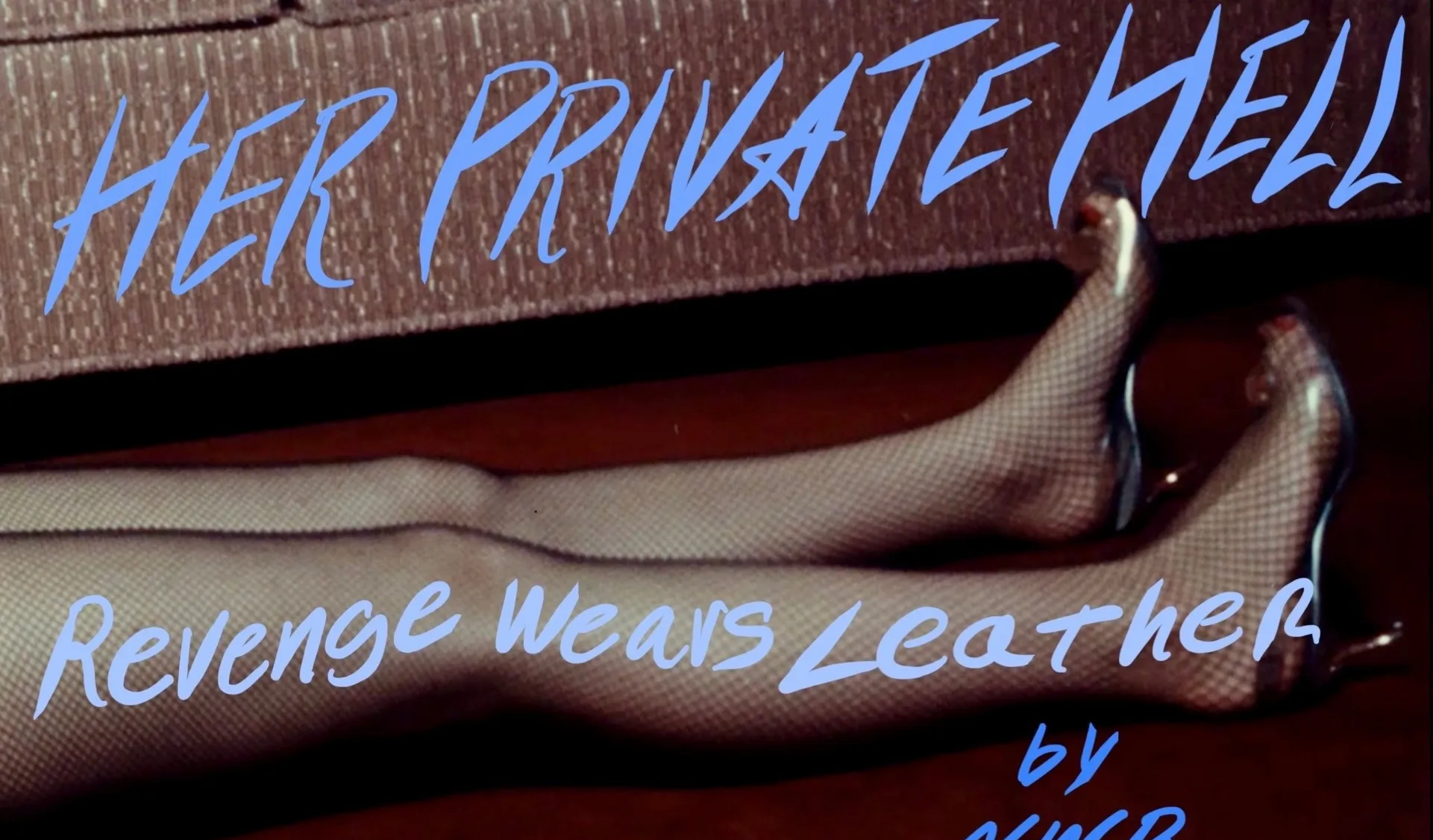
Her Private Hell
A Dream You Can't Quite Wake From
By ThePopulationAppeard