
We were at the Premiere
Written by Sofia Mongillo Bermejo
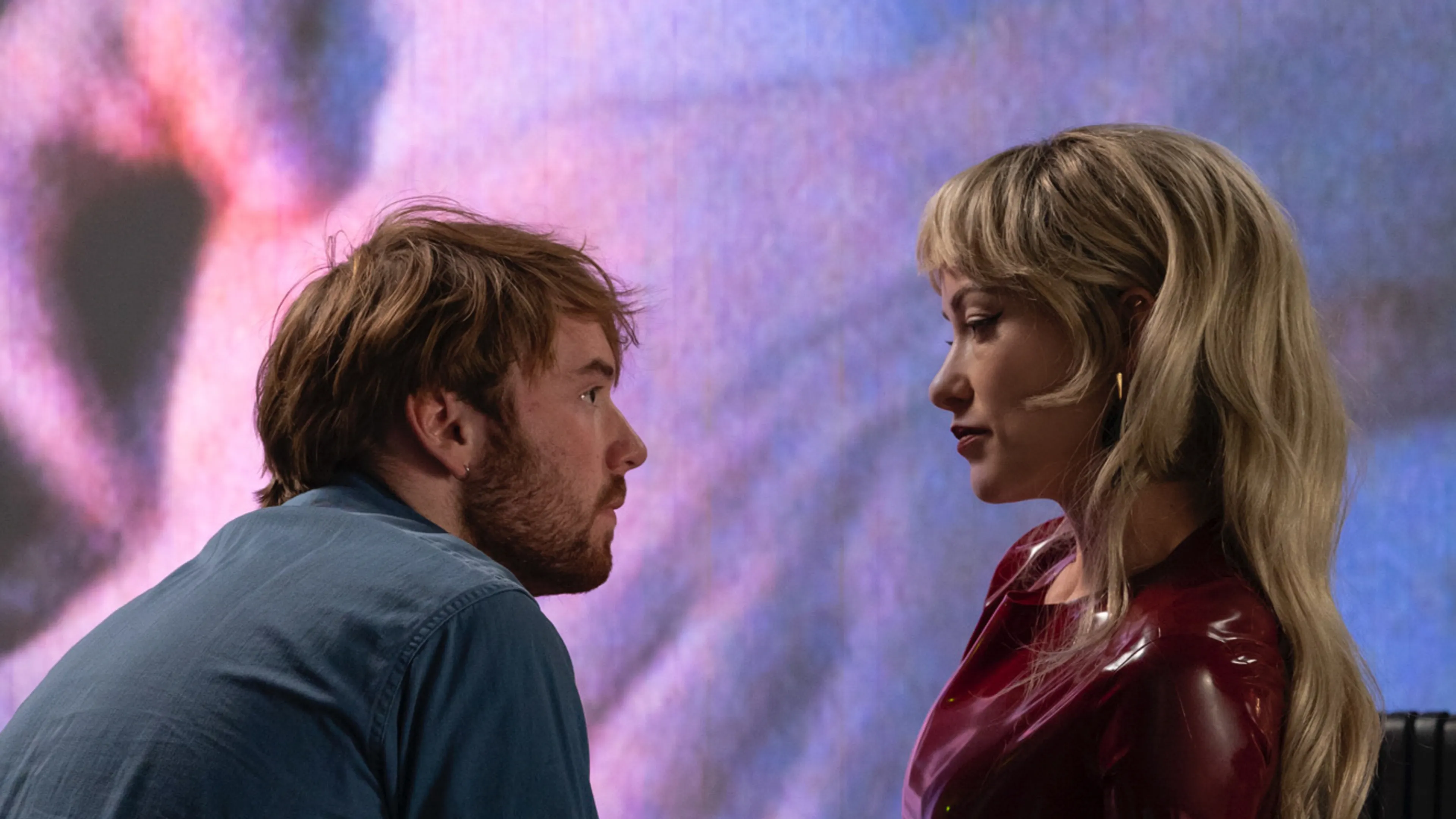
At the world premiere of Backrooms, 20-year-old director Kane Parsons gave a shoutout to his high school film teacher during the post-screening Q&A. Somewhere in the audience, he stood up and waved. It was a full-circle moment that feels impossible to separate from the film itself: a teenager who turned internet dread into one of horror’s defining modern mythologies now premiering an A24 feature before a packed theater.
What began
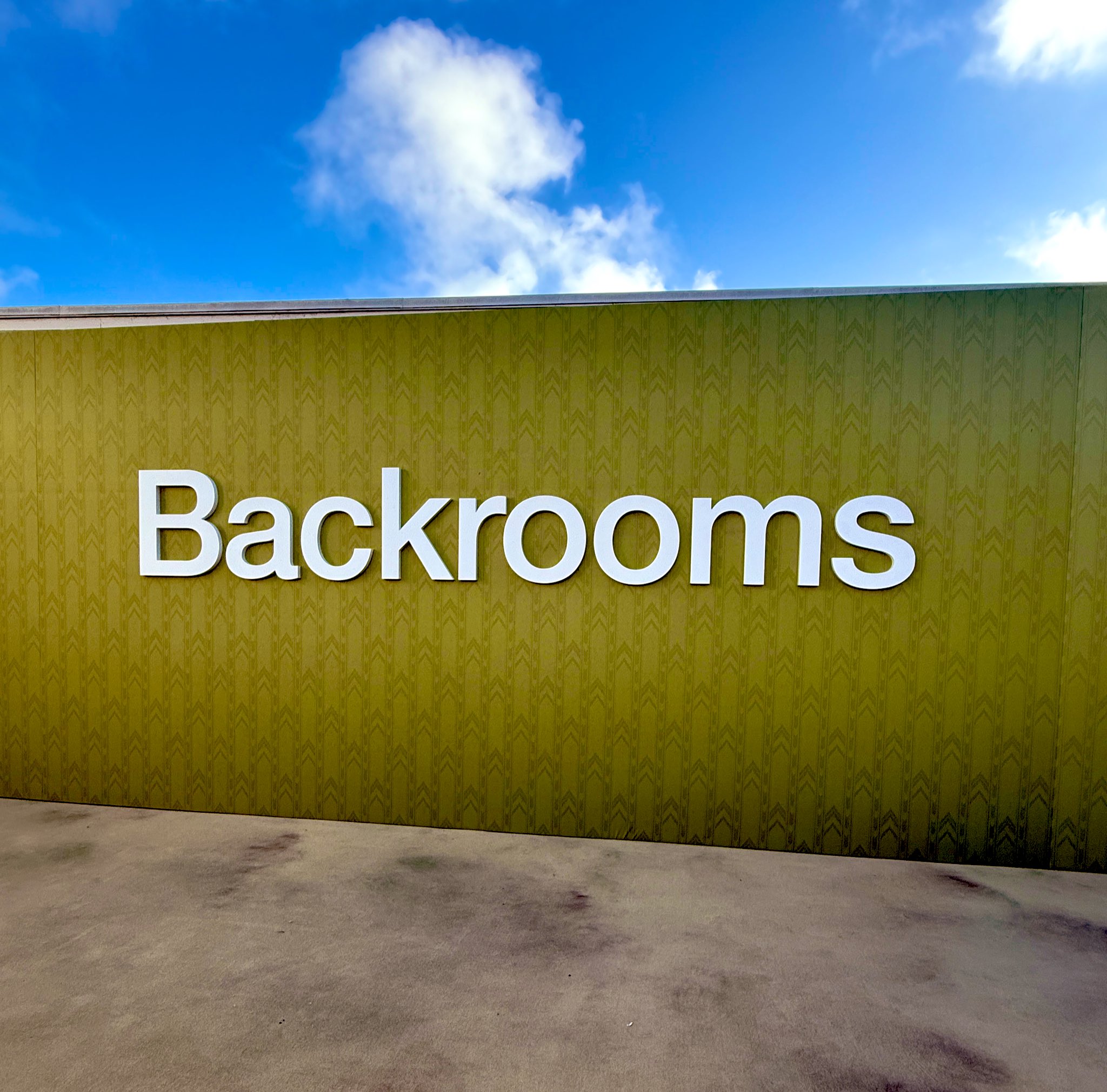
as a grainy creepypasta image posted anonymously to 4chan in 2019 has since evolved into something stranger and more culturally persistent. Parsons’ original YouTube shorts understood early on that the horror of Backrooms was never really about monsters. It was about space. Endless yellow hallways, fluorescent hums, empty office carpeting, and the suffocating realization that there may not be an exit at all.
The feature adaptation preserves that ambiguity. Rather than drowning the concept in exposition, the narrative leans deeper into isolation and spatial dread.
“I love architecture that has soul and detail,”
actress Renate Reinsve said during the Q&A. “And this world is the opposite. It’s the image of an infected world.”
That observation
cuts directly to what makes Backrooms so unnerving. Parsons transforms empty corporate architecture into something diseased and uncanny, where every hallway feels stripped of personality, history, and human warmth. The spaces are not simply abandoned; they feel actively hostile in their emptiness, like reality itself has been hollowed out.
This obsessive attention to space
extends into the film’s production design. Backrooms was constructed across a massive 30,000-square-foot physical set and four stages with Parsons explaining that he would scan locations, rebuild them digitally in Blender, and then work with the team to physically sculpt the environments around specific shots and camera movements. The result is a world that feels unnaturally precise, where every hallway appears engineered to disorient.
When asked
whether he intentionally made corners scarier, Parsons laughed before admitting, “I love corners.” It sounds like a joke until you watch the film itself, which turns every turn of a hallway into a threat. Backrooms understands that horror does not always need a monster standing in the frame. Sometimes the terror comes from what might exist just beyond the edge of it.
Sound becomes
one of the film’s most effective weapons. Parsons described the movie during the Q&A as “a more advanced sonic representation” of the original series “but also true to all of that,” and the adaptation succeeds largely because it understands how crucial audio has always been to Backrooms’ terror. Fluorescent buzzing, distant industrial echoes, and suffocating silence constantly suggest the presence of something just outside the frame. The movie rarely needs to insist that something is wrong. You can already hear it.
An inevitable question
surrounding any adaptation has always been what, exactly, might be waiting at the end of those endless hallways. Parsons approaches that uncertainty with restraint, preserving the ambiguity long enough for the audience’s imagination to remain the film’s most effective special effect. What I can say without spoiling too much is that the wait is worth it.
That ambiguity
will likely divide audiences expecting a more conventional horror narrative. Backrooms is intentionally light on exposition and occasionally thin in characterization outside of Reinsve’s performance, which gives the film its strongest emotional grounding. Viewers unfamiliar with the online mythology may find themselves more detached from the experience than immersed by it. But for those already attuned to the peculiar terror of liminal horror, Parsons understands exactly what makes the concept so enduringly unsettling.
Reinsve ultimately emerges
as the emotional center of the film, delivering the movie’s most layered and human performance amid all the fluorescent unreality. While much of the film intentionally drifts through abstraction, her presence gives the film something tangible to hold onto.
There are smaller horror pleasures
scattered throughout as well, including the appearance of Mark Duplass, whose casting feels like a quiet nod to viewers familiar with Creep and the recent lineage of intimate, psychologically destabilizing horror.
During the Q&A,
Parsons admitted he originally assumed his first Backrooms upload “was going to flop” compared to the other videos he was making at the time. Instead, it launched one of the internet’s most influential horror phenomena and transformed a teenager experimenting with online horror into one of the youngest directors to premiere an A24 film. More impressively, Backrooms survives the transition from YouTube mythology to theatrical horror without losing the uncanny emptiness that made the original concept so disturbing in the first place.
Beneath the internet mythology,
the fear itself remains strangely primal. It taps into the familiar childhood panic of losing sight of your parents in a grocery store for a few seconds and stretches that sensation into something cosmic and inescapable. Parsons understands the terror of feeling yourself slowly unravel inside an unfamiliar space, where memory, logic, and identity begin to dissolve alongside the endless hallways surrounding you.
Backrooms Premiere : Yellow Carpet Pictures
By ThePopulationAppeard
On the same topic


Read our latest ones
Verity
Unsettled, Not Sold
By ThePopulationAppeard
Buddy
Huggy, and a Little Bit Nutty
By ThePopulationAppeard
Insidious
Out of the Further: It Runs in the Family
By ThePopulationAppeard
Her Private Hell
A Dream You Can't Quite Wake From
By ThePopulationAppeard

Evil Dead Burn
Gore Has Never Felt This Personal
By ThePopulationAppeard